Food labels hold more information than most people notice. Understanding what’s written on them can help you choose healthier foods and avoid products with hidden sugars, fats, or chemicals. Every packaged food sold in India must follow the Food Safety and Standards Authority of India (FSSAI) labelling rules. Learning to read these labels like a nutritionist ensures you make better food choices every day.
Key Takeaways on Indian Food Labels
- Always check the FSSAI logo and license number for authenticity.
- Verify manufacture date, expiry date, and storage instructions.
- Read the nutrition facts — calories, fats, proteins, carbs, sugar, and sodium.
- Look for vegetarian (green dot) or non-vegetarian (brown dot) symbols.
- Pay attention to Daily Value (%DV) to know nutrient levels per serving.
- Be cautious with marketing claims like “low-fat” or “sugar-free.”
1. Check the Basic Details First
When you pick a packaged food item, start with the FSSAI logo and license number. These confirm the product meets safety standards.
Next, look at the manufacture date, best before, and expiry date. Eating food past its expiry date can affect your health.
The label also mentions the net weight and serving size, which tell you how much food you’re actually consuming per portion.
If the product shows a green dot, it’s vegetarian. A brown dot means it contains non-vegetarian ingredients, including eggs or milk. Some packs also carry a fortified logo, meaning essential vitamins and minerals like iron, vitamin A, or folic acid have been added.
2. Understand the Nutrition Facts
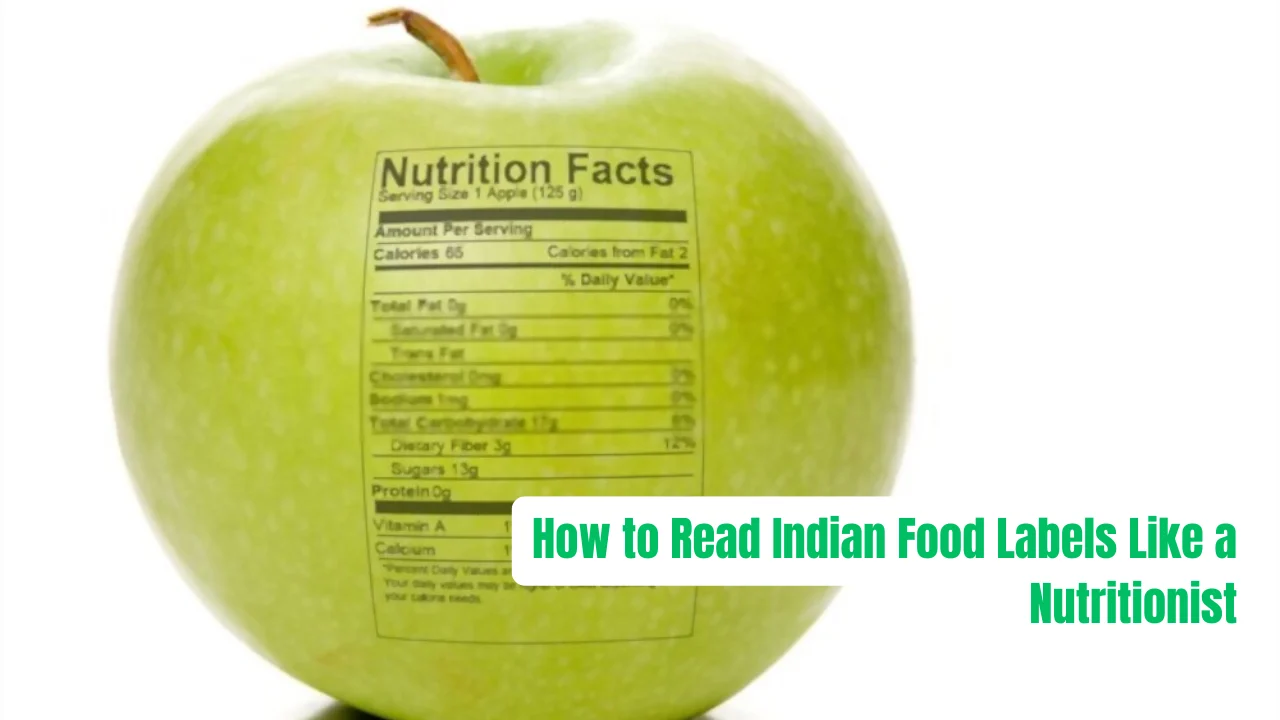
The nutrition facts table gives you a breakdown per serving or per 100 grams. This section is the key to knowing what you’re eating.
| Nutrient | What to Look For | Why It Matters |
|---|---|---|
| Energy (Calories) | Check calories per serving | Helps control daily calorie intake |
| Fat & Cholesterol | Choose foods low in saturated and trans fats | Reduces heart disease risk |
| Sodium (Salt) | Pick foods with less sodium | Helps manage blood pressure |
| Carbohydrates & Sugars | Look for low added sugar | Prevents weight gain and diabetes |
| Protein | Prefer higher protein content | Builds and repairs body tissues |
| Fibre | Look for at least 2–3g per 100g | Supports digestion and gut health |
| Vitamins & Minerals | Choose products rich in micronutrients | Boosts immunity and energy |
Check the % Daily Value (DV) next to each nutrient.
- A 5% DV or less means the food is low in that nutrient.
- A 20% DV or more means it’s high.
This helps you balance your daily intake for example, choosing low-sodium foods if another meal is salty.
3. Decode the Ingredient List
The ingredient list is arranged in descending order by quantity. The first few items make up most of the food.
Avoid products with too many refined flours, sugars, preservatives, or artificial flavors.
Watch for common allergens like nuts, milk, eggs, wheat, soy, and shellfish. Even small amounts can cause reactions in sensitive individuals.
For those who prefer organic or vegan foods, look for the Jaivik Bharat or Vegan logo introduced by FSSAI to identify genuine organic and plant-based products.
4. Be Careful with Health Claims
Food companies often use catchy claims to attract buyers. But not all of them tell the full story.
Here’s how to read them correctly:
- “Low Fat”: It may still have added sugar or refined flour to improve taste.
- “Sugar-Free”: Might include hidden sugars like maltitol or corn syrup.
- “All Natural”: Sometimes used loosely — always cross-check the ingredient list.
- “High in Protein” or “Rich in Vitamin D”: Check the exact value in grams or percentage next to it.
In short, never rely only on front labels always turn the pack around and read the full information before buying.
5. Practical Tips Before Buying Packaged Food
- Compare two products of the same type and pick the one with lower calories, sodium, and added sugars.
- Prefer foods with natural ingredients and shorter ingredient lists.
- Look for recyclable packaging to support environmental health.
- When unsure about a claim, visit the FSSAI’s Pink Book or website for clarity.