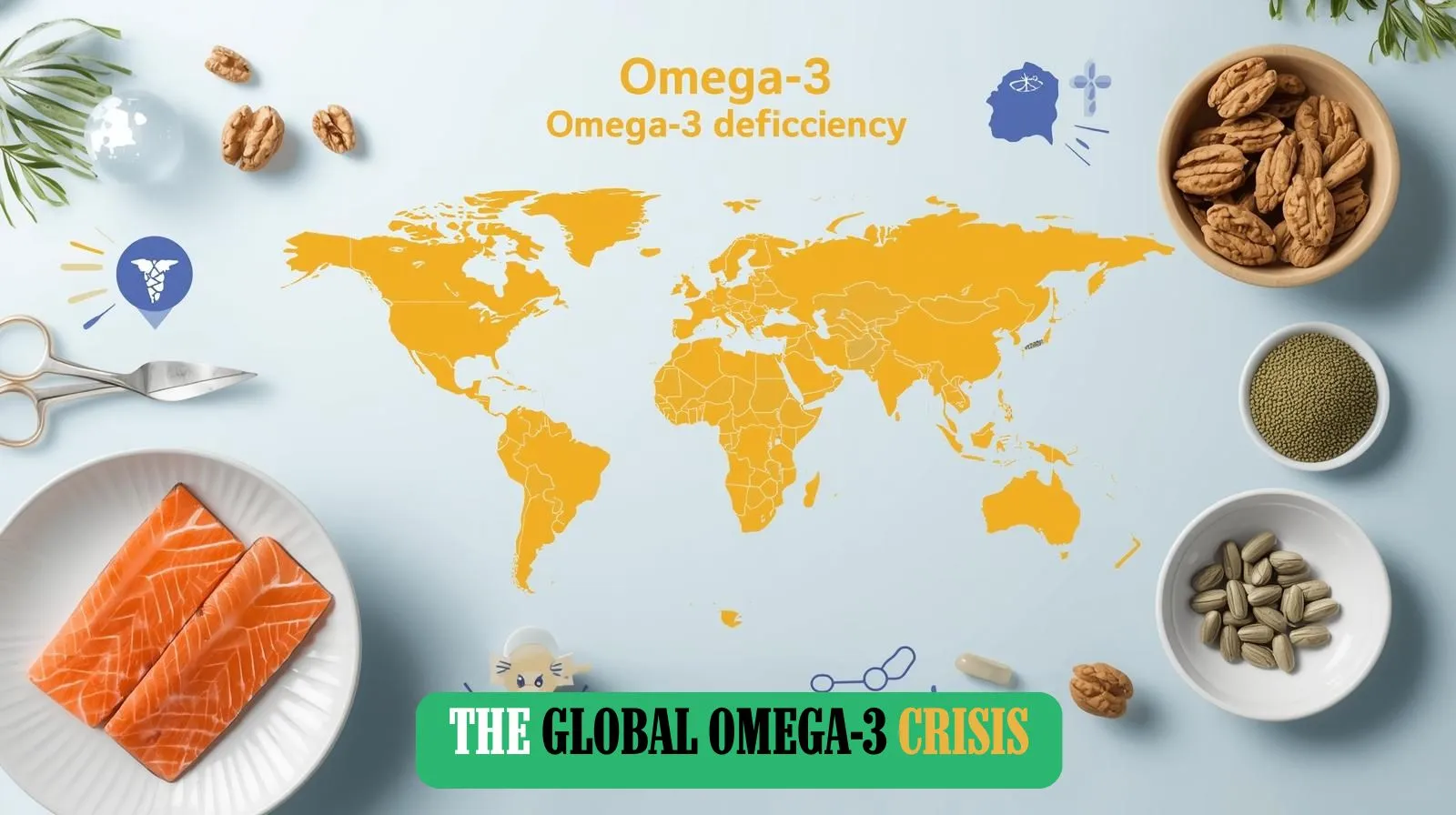
Now and then, nutrition research uncovers a finding that stops the world in its tracks.This new global review from the University of East Anglia, the University of Southampton, and Holland & Barrett is exactly that kind of wake-up call. After studying Omega-3 intake levels and dietary guidelines from 42 countries, researchers found that 76% of the world isn’t getting enough Omega-3. Not slightly low, but dramatically below what the body needs for healthy brain function, mood, heart protection, immunity and long-term wellbeing.
And because Omega-3 deficiency doesn’t show obvious symptoms early on, billions of people may not even realise their health is being affected.

A Worldwide Problem: Why Omega-3 Deficiency Is Rising So Quickly
This review is the first to examine Omega-3 recommendations across all stages of life, including children, adults, pregnant women, and older adults. What researchers found was hard to ignore. Most people consume far less EPA and DHA than recommended, and many countries don’t offer clear guidance at all. Even people who believe they eat “clean” or “healthy” often fall far short.
Professor Anne Marie Minihane of the University of East Anglia explained that the gap between what’s recommended and what people actually consume is much wider than anyone expected, turning Omega-3 deficiency into a global health concern.
Why Omega-3 Matters: The Nutrient Your Brain, Heart and Mood Can’t Live Without
Omega-3 fatty acids, especially EPA and DHA, are not optional. They’re essential for how your body and brain function every single day. DHA supports the structure of your brain, sharpens memory, helps stabilise mood and protects against age-related cognitive decline. EPA helps reduce inflammation, keeps your heart healthy, supports emotional well-being and strengthens immunity.
For pregnant women, Omega-3 needs rise even more. DHA helps build a baby’s brain and eyes, reduces the chance of pre-term birth and supports healthy development throughout pregnancy.
Dr Abbie Cawood, Science Director at Holland & Barrett and Visiting Research Fellow at the University of Southampton, puts it clearly: the benefits of EPA and DHA are far too important to ignore. Yet most people simply aren’t getting enough.
How Much Omega-3 You Actually Need and Why Most People Aren’t Getting It
Around the world, most health organisations agree that adults need about 250 mg of EPA + DHA per day. Pregnant women need an extra 100–200 mg of DHA for their baby’s brain development. Children need varying amounts as they grow.
These are the minimum requirements that your body needs just to function properly.But the majority of people don’t reach even these basic levels.

Why Food Alone Isn’t Enough to Cover Omega-3 Needs
Many people assume they can get enough Omega-3 from their everyday meals. The research says otherwise.
Oily fish like salmon, sardines and mackerel are the richest natural sources of EPA and DHA. But fish consumption is uneven across the world. In many places, fish is expensive, rare, or avoided because of culture or taste preferences. Plant foods like chia seeds, flax seeds and walnuts contain ALA, another Omega-3, but the human body converts only a tiny amount of ALA into EPA and DHA, far too little to meet daily requirements.
This is why vegetarians, vegans and people who rarely eat fish are at a much higher risk of deficiency. Dr Cawood points out that for many people, especially pregnant women, supplementation becomes essential.
Regions Hit Hardest: India, Asia and Latin America
The study shows that certain regions are falling far behind. India is one of the most Omega-3-deficient countries in the world. Low fish consumption and a predominantly vegetarian diet leave millions without a reliable source of EPA and DHA. Urban diets, often heavy in processed foods, widen the gap even more.
The trend is similar across parts of Asia and Latin America. Economic factors, cultural eating patterns and limited access to fish all contribute to widespread deficiency.
Even countries that do consume fish struggle with inconsistent or outdated guidelines, leaving people confused about how much Omega-3 they should aim for.
Confusing Global Guidelines: Why People Don’t Know What “Enough” Means
When researchers compared Omega-3 recommendations from 42 countries, they found huge differences. Some nations offer clear and detailed advice. Others provide partial guidance. Many offer none at all.
This inconsistency leaves healthcare workers unsure of what to recommend and leaves ordinary people without any clear target to follow. Professor Philip Calder from the University of Southampton summed it up simply: across countries and age groups, most people are not meeting recommended intake levels.
Health Risks That Build Up Quietly Over Time
Omega-3 deficiency doesn’t scream for attention. It doesn’t cause a dramatic symptom that sends you to the doctor. Instead, it works in the background, slowly influencing inflammation, heart health, mood stability, memory and overall brain function.
Long-term deficiency increases the risk of heart disease, weakens immunity, and contributes to anxiety and depression. In pregnancy, low DHA is linked to higher rates of pre-term birth and reduced early brain development.
This is why experts now consider Omega-3 deficiency a major global public health issue, one that isn’t being addressed fast enough.
When Supplements Become Necessary and Why Experts Support Them
Since food alone can’t meet the needs of most people, experts strongly recommend looking at alternative sources. Fish oil capsules provide consistent amounts of EPA and DHA. Algae-based Omega-3 is a sustainable, plant-friendly option that is ideal for vegetarians, vegans and anyone who avoids seafood.
For pregnant women, controlled DHA supplementation is not just helpful, it’s widely recommended by researchers in maternal nutrition.
Supplements aren’t shortcuts. They are the scientifically proven way to fix a nutritional gap that ordinary diets can’t bridge.
The Future of Omega-3: More Sustainable, More Accessible
With global fish stocks under pressure, experts agree that we can’t rely on seafood alone to fill this shortage. The future lies in algae cultivation, fortified foods, and innovative aquaculture methods that make Omega-3 more accessible, moresustainable and more affordable.
These solutions could help countries like India and others across Asia and Latin America close their Omega-3 gap for the first time.
What You Can Do Today to Increase Your Omega-3 Intake
Small, consistent steps make a big difference. Eating oily fish once or twice a week helps, though it rarely reaches full daily requirements. Adding walnuts, chia seeds, or flax seeds supports general nutrition, even if conversion rates are low. Algae supplements provide a clean, reliable boost for DHA and EPA levels. Pregnant women should start DHA early and maintain it throughout pregnancy and breastfeeding.
And if you’re not sure how much you need, a quick conversation with a healthcare provider can guide you in the right direction.
Final Take: Omega-3 Isn’t Optional, It’s a Global Health Priority
This global review leaves no room for doubt. Millions of people aren’t getting the Omega-3 they need, and the consequences are real. Confusing guidelines, limited access to fish, and rising dietary changes have created a nutritional gap that affects how we think, feel and age.
Until governments create clear policies and sustainable solutions, the responsibility falls on each of us to protect our health. Omega-3 isn’t a luxury. It’s essential. And closing this gap may be one of the most important steps we can take for long-term wellbeing, both individually and globally.
FAQ
1. Why are 76% of people not getting enough Omega-3?
Most people eat little or no oily fish, and plant-based sources don’t convert well into EPA and DHA. Many countries also don’t provide clear intake guidelines.
2. How much Omega-3 do adults need daily?
Most experts recommend 250 mg of EPA + DHA per day. Pregnant women need an additional 100–200 mg of DHA.
3. Can vegetarians or vegans get enough Omega-3?
ALA-rich foods like walnuts and flax seeds help nutritionally, but they don’t provide enough EPA or DHA. Algae-based supplements are the best plant-friendly option.
4. What are the risks of Omega-3 deficiency?
Long-term deficiency raises inflammation, affects mood, weakens immunity, impactsmemory and increases the risk of heart disease.
5. Is food enough to meet Omega-3 needs?
For most people, no. Low seafood consumption and poor ALA-to-DHA conversion mean supplements or fortified foods are often necessary.
6. Which regions have the lowest Omega-3 intake?
India, parts of Asia and Latin America show the biggest gaps due to low seafood intake and unclear nutritional guidelines.