Eating kimchi daily for 12 weeks may do more than help your gut. New research shows it can shift how key immune cells act, which points to better balance in the body. The mix of live bacteria, fiber, and spices in kimchi seems to guide these changes in a steady, natural way.
Table of Contents
Key Takeaway
A recent human trial found daily kimchi for 12 weeks changed immune cells.
The changes looked like better immune balance, not a blunt immune boost.
That matters, because too much immune action can also cause harm.
What Kimchi Is and Why It Matters for Health
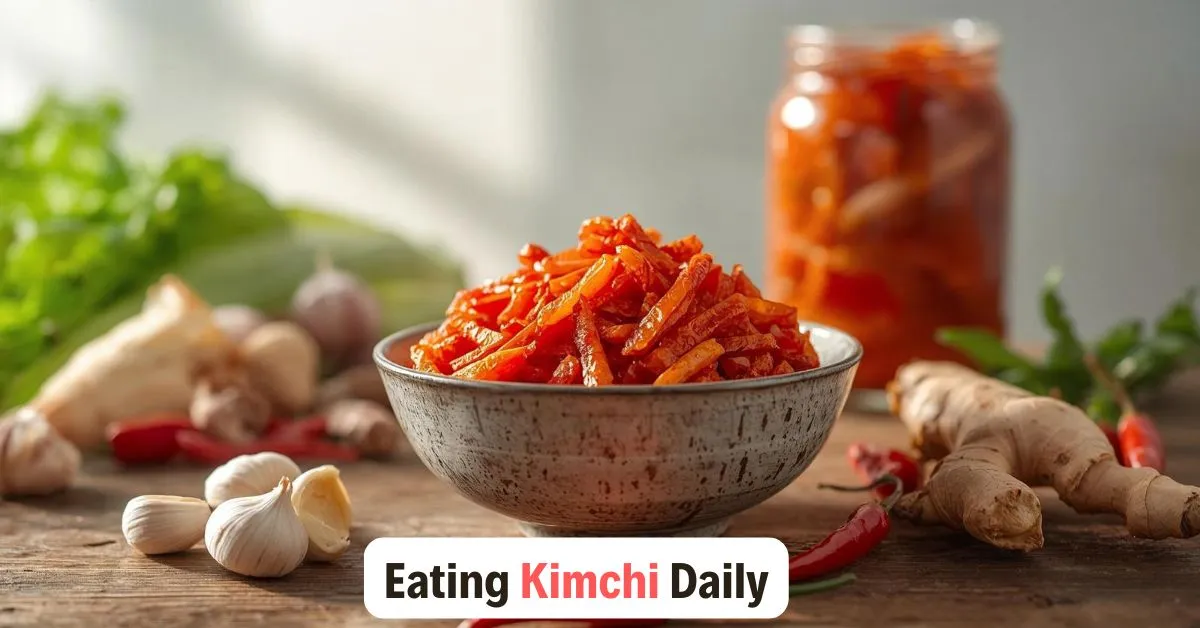
Kimchi is a Korean fermented vegetable food, often made with napa cabbage.
It usually includes garlic, ginger, red pepper, and salted seafood or soy.
Fermentation grows helpful bacteria, mainly lactic acid bacteria.
That mix makes kimchi both nutrient-rich and probiotic-rich.
Kimchi matters because the gut and immune system talk all day.
Most immune activity is linked to the gut lining and its microbes.
So foods that shift gut microbes can shift immune signals too.

Key Nutrients in Kimchi That Support Immune Function
Kimchi brings more than probiotics to the table.
It also has fiber, vitamins, and plant compounds from vegetables and spices.
Many sources highlight vitamins like vitamin C and other antioxidants.
Here’s what helps most:
- Fiber feeds gut microbes and supports steady digestion.
- Fermentation acids can help shape which microbes thrive.
- Garlic and ginger compounds may support anti-inflame pathways.
- Capsaicin from chili can affect gut and immune signals in some people.
One catch is sodium.
Kimchi can be high in salt, depending on the recipe and serving size.
For many people, portion size is the difference between helpful and too much.
How Kimchi Affects Gut Bacteria
Fermented foods can add live microbes and change the gut mix.
Kimchi often contains Lactobacillus, Leuconostoc, and Weissella strains.
These may help crowd out some unwanted microbes.
Human studies also link kimchi intake with microbiome shifts.
For example, one 12-week trial using kimchi powders saw more gut diversity.
Another clinical trial found changes in gut microbes alongside symptom changes.
What this really means is simple.
If your gut ecosystem improves, immune signals often look calmer.
How a Healthy Gut Supports the Immune System
Your gut lining is a barrier and a control center.
It decides what gets through and what gets blocked.
Gut microbes help train immune cells to react at the right time.
When the gut is off, the immune system often gets jumpy.
That can show up as more inflame markers, more gut upset, or more flares.
Fermented foods may help by raising microbe variety and lowering some inflame proteins.
Kimchi can support gut health through both microbes and fiber.
That combo is why it gets so much immune interest.
What Research Says About Kimchi and Immunity
The most direct support comes from a newer 12-week kimchi trial.
Researchers used single-cell methods to see immune cell changes.
They reported stronger antigen presentation and CD4+ T-cell remodeling.
Here’s the key point from the paper’s summary.
It showed immune changes without broad, whole-body immune activation.
That fits the word regulate better than boost.
Older human work also suggests immune effects from kimchi intake.
And there are trials linking kimchi with lower gut-related inflame signals.
Still, keep your expectations real.
One study does not mean the same result for everyone.
Diet, sleep, stress, and gut health can change the outcome.

How Much Kimchi You Need for Real Benefits
In studies, the “dose” can be larger than most people eat.
Some trials used daily servings for weeks, sometimes quite high amounts.
For normal daily life, start small and stay steady:
- Try 1 to 2 tablespoons daily for a week.
- Move up to ¼ to ½ cup daily if you feel good.
- Aim for most days, not perfection.
If sodium is a concern, keep portions smaller.
You can also balance salt by eating more fresh, high-potassium foods.
Think fruits, beans, leafy greens, and plain yogurt or kefir.
Best Time to Eat Kimchi for Digestive Comfort
Kimchi can be spicy, acidic, and gassy for some people.
So timing matters if you have a sensitive gut.
Most people do best with kimchi:
- With meals, not on an empty stomach.
- Earlier in the day, if it triggers reflux at night.
- With plain foods, like rice, eggs, tofu, or lentils.
If you get bloating, reduce the portion.
Your gut may adapt after a week or two.
If symptoms stay, kimchi may not be your food.
Who Should Be Careful With Kimchi
Kimchi is not a fit for everyone.
Be cautious if you have:
- High blood pressure or you limit sodium.
- Kidney disease, where salt limits are strict.
- Reflux or gastritis, since spicy acid can flare symptoms.
- Histamine issues, since fermented foods can trigger reactions.
- IBS with FODMAP triggers, since cabbage and garlic can irritate.
Also, choose safe sources.
Home fermenting is great, but hygiene matters.
Store it cold and watch for odd smells or mold.
Signs Your Immune System Needs Support
Most people think of colds only.
But immune stress can look broader.
Common signs include:
- Frequent infections or slow recovery.
- Poor sleep and constant tiredness.
- Slow wound healing.
- Ongoing gut issues and food sensitivity.
If these are severe or new, get checked.
Low iron, low vitamin D, and stress can mimic immune problems.
Why the Immune System Matters for Long-Term Health
Your immune system does more than fight germs.
It clears damaged cells and helps control inflame.
When it’s balanced, you recover faster from illness.
You also tend to have fewer chronic inflame problems.
When it’s unbalanced, you can see more allergy, auto-immune flares, or gut issues.
That’s why the idea of regulate is so important.
The goal is the right response, at the right time.
Other Simple Ways to Support the Immune System
Kimchi can help, but basics matter more.
Focus on these daily:
- Sleep 7 to 9 hours, at steady times.
- Eat enough protein, plus fruits and vegetables.
- Move most days, even a 30-minute walk.
- Manage stress, because stress hormones shift immunity.
- Keep vaccines up to date, when advised.
A fermented-food pattern can also help.
A Stanford study found a fermented-food diet raised microbe variety.
It also lowered several inflame proteins in adults.
Why Trying to Boost the Immune System Can Backfire
Here’s the thing.
A stronger immune system is not always a better one.
Too much immune activity can raise inflame.
That can worsen allergy, asthma, eczema, and some auto-immune issues.
So avoid products that promise extreme boosts.
Kimchi is interesting because the new trial suggests balance.
It showed immune remodeling without broad immune activation.
That’s closer to fine-tuning than forcing.
FAQ
Is eating kimchi daily safe?
For most healthy adults, small daily portions are fine.
Watch salt, reflux, and histamine reactions.
How much kimchi should I eat each day?
Start with 1–2 tablespoons daily, then adjust.
If you tolerate it, ¼–½ cup is common.
Does kimchi really boost immunity?
Evidence points more toward immune regulation than raw boosting.
Can I get the same benefits from pasteurized kimchi?
Pasteurized kimchi has fewer live bacteria.
You still get fiber and nutrients, but probiotic effects may drop.
What if kimchi upsets my stomach?
Eat less, take it with meals, and avoid late-night servings.
If symptoms persist, choose milder ferments like yogurt or kefir.