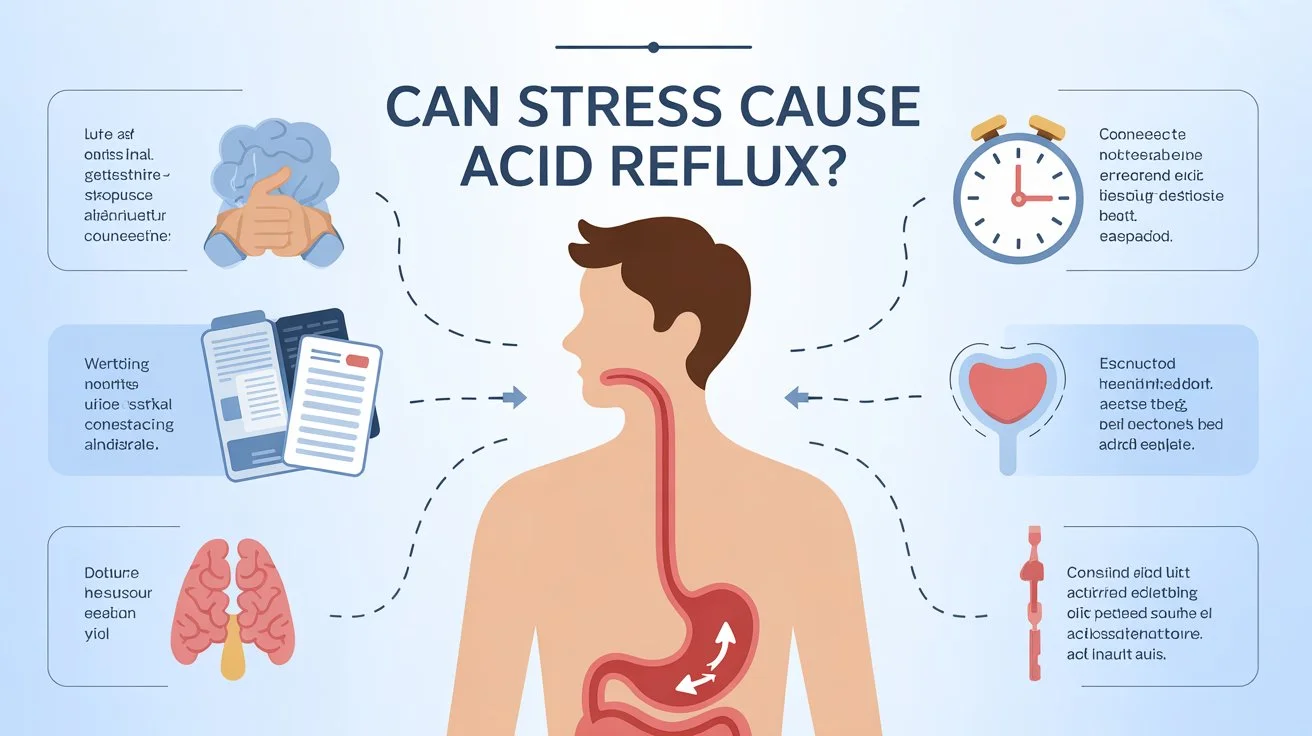
Can stress cause acid reflux? Many people across the United States ask this question when heartburn appears during busy or emotional periods. The link between the mind and the gut is stronger than most realize. Research shows a clear stress and acid reflux connection, especially in individuals dealing with anxiety, poor sleep, and high-pressure lifestyles.
When your body enters a stress response, it can disrupt digestion, increase stress and stomach acid, and even weaken the lower oesophageal sphincter dysfunction process that keeps acid down. Over time, this may trigger stress induced acid reflux and worsen symptoms linked to GERD and stress, making daily life uncomfortable.
Table of Contents
Key Takeaways (Quick Summary)
Can stress cause acid reflux? Yes, stress can worsen symptoms and trigger flare-ups. It increases stress and stomach acid, weakens the lower esophageal sphincter (LES), and disrupts digestion. Many people notice anxiety and heartburn appear together. The link between GERD and stress is supported by research in U.S. clinical studies.
Stress changes hormone levels. The cortisol hormone alters digestion. The vagus nerve becomes overstimulated. These shifts increase gastric acid secretion and slow gastric motility. Over time, this creates stress related GERD symptoms and worsens inflammation.

What Is Acid Reflux?
Acid reflux happens when stomach contents flow back into the esophagus. This condition is medically known as gastroesophageal reflux (GER). When it becomes chronic, it turns into gastroesophageal reflux disease (GERD). The main gatekeeper is the lower esophageal sphincter (LES). When it weakens, acid moves upward.
Repeated reflux causes esophageal irritation, burning pain, and discomfort. Many Americans live with it daily. Obesity rates, processed foods, and late-night meals increase risk. The table below explains the difference.
| Condition | Frequency | Main Cause | Risk Level |
|---|---|---|---|
| gastroesophageal reflux (GER) | Occasional | Temporary LES relaxation | Mild |
| gastroesophageal reflux disease (GERD) | Frequent | Chronic lower esophageal sphincter dysfunction | Higher |
What Are the Common Symptoms of Acid Reflux?
The most common symptom is heartburn. It feels like fire behind your chest. You may taste acid. That bitter feeling is called regurgitation. Some people feel upper abdominal pain known as dyspepsia. Others develop chronic cough, hoarseness, or trouble swallowing.
Stress often makes symptoms feel stronger. This is why people with reflux and mental health challenges report higher pain levels. Nighttime reflux, chest tightness, and throat burning are common during periods of high anxiety. These are classic stress related GERD symptoms.
What Causes Acid Reflux?
Acid reflux has many triggers. Weak LES muscles. A hiatal hernia. Obesity. Smoking. Certain medications. These are well known acid reflux triggers. Diet also plays a role. Fatty meals, caffeine, chocolate, and alcohol increase symptoms.
However, researchers now highlight the stress impact on digestion. Emotional strain changes gut motility and increases pressure inside the stomach. This pressure pushes acid upward. Chronic tension also causes stomach acid imbalance, worsening inflammation.
Can Stress Cause Acid Reflux?
So, can stress cause acid reflux directly? Not always. Yet stress can absolutely trigger episodes. The body releases the cortisol hormone during anxiety. This affects cortisol and digestion patterns. It also increases stress and gastric acid production.
Chronic tension activates the fight or flight response repeatedly. This disrupts gastric acid secretion and slows delayed gastric emptying. Food stays longer in the stomach. Pressure rises. Acid escapes. That is how stress induced acid reflux begins.
How Stress Affects the Lower Oesophageal Sphincter (LES)
The lower esophageal sphincter (LES) acts like a valve. Stress weakens it. Hormonal changes lead to lower esophageal sphincter dysfunction. Acid then flows upward more easily.
Stress also disrupts nerve signals through the vagus nerve. These altered signals affect muscle tone. Over time, repeated stress episodes make reflux more frequent. This explains the tight bond between GERD and stress.
How Stress Increases Stomach Acid Production
When you feel anxious, your brain sends signals to the stomach. These signals increase stress and stomach acid. The body prepares for danger, not digestion. That response shifts energy away from normal processing.
Research shows that stress hormones and reflux are closely linked. Increased gastric acid secretion combined with delayed gastric emptying causes buildup. This buildup pushes acid into the esophagus. The result is burning pain and inflammation.
The Mind-Body Connection: Stress, Anxiety, and GERD
The gut and brain communicate constantly. Scientists call this the brain-gut axis. When anxiety rises, pain perception increases. This is why anxiety and heartburn feel worse than normal reflux.
Chronic tension leads to chronic stress and GERD cycles. Emotional strain alters prostaglandins, protective chemicals in the stomach lining. Reduced protection leads to more irritation. Many Americans with anxiety disorders report higher rates of digestive problems from stress.
Can Stress Make GERD Symptoms Worse?
Yes. Stress amplifies sensitivity. Even small amounts of acid can feel intense. This hypersensitivity increases burning sensations. People also change behaviors when stressed. They overeat. They drink alcohol. They skip sleep.
These behaviors worsen stress related GERD symptoms. The combination of emotional strain and unhealthy habits creates flare-ups. The stress and acid reflux connection becomes stronger over time.
How to Treat Acid Reflux Caused by Stress
Treatment must address both stomach and mind. Medication alone may not solve the issue. You must reduce tension. You must protect the esophagus.
A combined strategy works best. That includes natural stress reduction, dietary shifts, and medical support when needed. Managing stress impact on digestion helps calm symptoms.
Reducing Stress Naturally
Deep breathing helps regulate the vagus nerve. Meditation lowers the cortisol hormone. Exercise improves blood flow and reduces anxiety. Even short walks matter. Therapy also helps break the chronic stress and GERD cycle.
Sleep improves hormone balance. Limiting screen time at night reduces overstimulation. These small habits reduce stress and gastric acid production naturally.
Dietary and Lifestyle Changes
Eat smaller meals. Avoid trigger foods. Elevate your head while sleeping. Stop smoking. Limit caffeine. Drink water regularly.
The table below shows helpful changes.
| Lifestyle Change | Why It Helps |
|---|---|
| Smaller meals | Reduces stomach pressure |
| Early dinners | Prevents nighttime reflux |
| Weight control | Decreases abdominal pressure |
| Avoid alcohol | Lowers LES relaxation |
Medical Treatments for GERD
Doctors often recommend antacids, H2 blockers, or proton pump inhibitors. These reduce gastric acid secretion. However, long-term use should be monitored. Always consult a healthcare provider in the U.S. if symptoms persist.
If medication fails, testing may evaluate gastric motility or check for hiatal hernia. Proper diagnosis prevents complications.
When to See a Doctor for Stress-Related Acid Reflux
Seek medical care if symptoms last more than two weeks. Difficulty swallowing. Weight loss. Vomiting blood. Persistent chest pain. These signs require urgent evaluation.
Untreated gastroesophageal reflux disease (GERD) can cause severe esophageal irritation. Early treatment prevents complications. Never ignore worsening symptoms.
FAQs About Stress and Acid Reflux
Can emotional stress trigger GERD?
Yes, emotional stress can worsen GERD by increasing stomach acid and relaxing the lower esophageal sphincter, which allows acid to flow upward.
Can GERD cause arm pain?
GERD can sometimes cause chest discomfort that radiates to the arm, but arm pain should always be evaluated to rule out heart problems.
Can I live a long life with GERD?
Yes, most people live a normal life with GERD if they manage symptoms through lifestyle changes and proper medical treatment.
How long does a GERD episode last?
A GERD episode can last from a few minutes to several hours depending on triggers, severity, and treatment.