
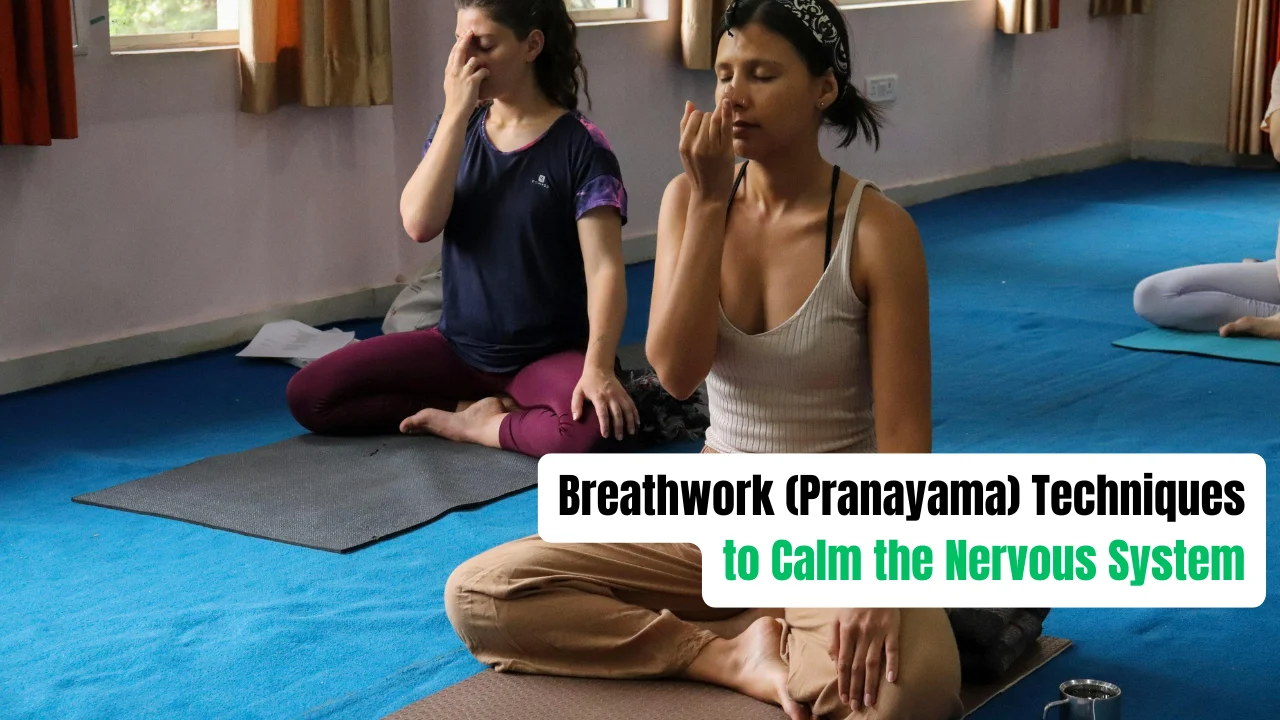
Breathwork has become one of the most effective natural tools to calm the mind and relax the body. These techniques, known as pranayama in yoga, help regulate the nervous system through controlled breathing patterns. When the breath slows and becomes steady, the body shifts into a calmer state. This response supports better focus, improved emotional balance and deeper relaxation.
Key Takeaways Breathwork (Pranayama) Techniques
- Controlled breathing shifts the body toward relaxation
- Longer exhalations help reduce sympathetic activity
- Nasal and diaphragmatic breathing stabilize heart rate
- Pranayama helps balance stress, mood and energy
- Simple daily exercises build long term calmness
How Breathwork Influences the Nervous System
Pranayama works directly with the autonomic nervous system. This system controls heart rate, blood pressure and several internal functions. It has two branches. The sympathetic system increases energy and prepares the body for activity. The parasympathetic system supports rest and recovery.
Breathing changes how these branches respond. Inhalation increases sympathetic activity. Exhalation increases parasympathetic activity. When the exhalation becomes longer, the relaxation response becomes stronger. Techniques such as even breathing and extended exhalation help the body maintain a balanced rhythm.
Many studies show that slow nasal breathing activates the parasympathetic system. This shift lowers muscle tension, reduces heart rate and supports emotional stability. People who practice pranayama often report reduced anxiety and improved mental clarity.
Basic Foundations Before Starting Pranayama
Before learning advanced techniques, it is important to train the breath. The first step is to breathe through the nose with a quiet and smooth flow. The chest should stay relaxed. The diaphragm should move freely. Once the breath becomes steady, the next step is equal breathing, where inhalation and exhalation match in duration.
This pattern creates a stable rhythm across the nervous system. It prepares the body for deeper techniques that extend the breath in a safe way. Building this foundation prevents strain and keeps the breathing cycle comfortable.
Core Breathwork Methods for Calmness
- Even breathing to establish steady flow
- Extended exhalation for deeper relaxation
- Alternate nostril breathing for balance
- Diaphragmatic breathing for stability
- Gentle humming breath to quiet the mind
Key Pranayama Techniques to Try
Extended Exhalation Technique
This method slows exhalation to twice the length of inhalation. For example, you may inhale for three counts and exhale for six counts. The longer breath out reduces sympathetic activity and increases relaxation. It also helps release carbon dioxide more effectively, which improves the quality of each new breath.
Diaphragmatic Breathing
Here the diaphragm leads the movement. The abdomen rises during inhalation and falls during exhalation. This method encourages efficient oxygen exchange. It also lowers tension in the chest and neck muscles.
Alternate Nostril Breathing
This technique guides the breath through one nostril at a time. It helps balance the left and right sides of the brain. Many people use it before meditation because it creates a calm and centered state. It also supports a smoother breath rhythm.
Gentle Humming Breath
This method uses a soft humming sound during exhalation. The vibration reduces mental noise and promotes a sense of ease. It is useful for people who experience restlessness or difficulty focusing.
Using Breathwork in Daily Life
Pranayama can be practiced at home, at work or during breaks throughout the day. Short sessions help regulate stress and settle the mind. Practicing in a quiet space supports deeper relaxation, but simple exercises can also help in busy environments.
Many people use pranayama before sleep to lower stress levels. Others use it before exercise to improve the breath rhythm. Athletes often use longer exhalations during training because it improves endurance and supports steady performance.
Breathwork also helps during emotional stress. When the breath becomes slow and steady, tension reduces naturally. This effect supports clearer thinking and improves response to challenging situations.
Bottom Line Breathwork (Pranayama) Techniques
Pranayama offers a simple and natural way to calm the nervous system. Techniques such as even breathing, long exhalations and alternate nostril breathing reduce stress and improve emotional balance. With regular practice, the breath becomes smoother, the mind becomes clearer and the body learns to relax more easily. Anyone can start these exercises and experience steady improvement over time.





1 thought on “Breathwork (Pranayama) Techniques to Calm the Nervous System”