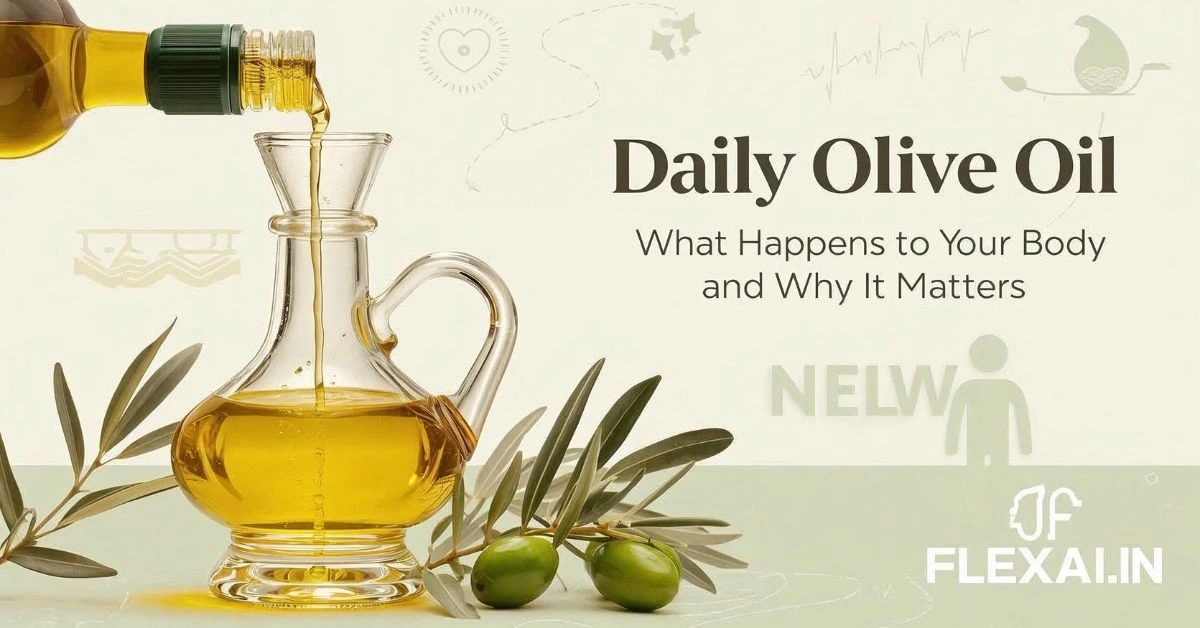
Daily olive oil can support heart health, digestion, skin, and brain function. Here’s what really happens in your body when you have it each day.
If you start your day with a spoon of olive oil or add it to your meals, you might wonder what it really does inside your body. Here’s the thing. A small daily amount can trigger steady changes you can feel over time. Your heart, gut, skin, and brain respond to it in simple but powerful ways. This guide breaks down what happens when you have olive oil every day and how to use it the right way.
Table of Contents
Key Takeaways
- Daily olive oil supports heart health, digestion, skin, and brain function.
- 1–2 tablespoons per day is enough.
- Extra virgin olive oil offers the most benefits.
- Works best when used in place of unhealthy fats.
- Helps with fullness, cravings, and steady blood sugar.
- Not meant for high-heat frying.
- Consistency matters more than timing.
What Makes Olive Oil So Good for Your Body
Olive oil works because of its mix of healthy fats and plant compounds.
Short chain, easy-to-digest fats help your heart and brain.
Natural antioxidants fight cell stress and wear.
This combo leads to clear benefits backed by research.
The Core Nutrients
- Monounsaturated fats (main driver of heart support)
- Vitamin E (skin and cell support)
- Polyphenols (natural antioxidants that protect your cells)
- Anti-inflammatory compounds
Research note: The American Heart Association links monounsaturated fats with better heart health and lower LDL cholesterol when used in place of saturated fats.
What Happens to Your Heart When You Have Olive Oil Every Day
Your heart is one of the first organs to respond.
1. Your cholesterol balance shifts
Daily olive oil may help lower LDL (the type that clogs arteries) and support HDL (the type that carries cholesterol away).
This shift may lower long-term heart disease risk when paired with a healthy lifestyle.
2. Your blood vessels relax
Polyphenols help blood flow by easing pressure on vessel walls.
Better blood flow means better oxygen supply to your organs.
3. Your inflammation levels may drop
Low-grade inflammation is tied to heart issues.
Olive oil’s antioxidants help calm this stress over time.
What Happens to Your Digestion
Here’s what most people notice first.
1. Your gut moves smoother
Olive oil works as a natural lubricant for your digestive tract.
It may help reduce slow digestion or mild constipation.
2. Your gut lining gains protection
Antioxidants support the cells that protect your stomach and intestines.
Some studies suggest olive oil may help reduce stomach acid damage when used with a balanced diet.
3. Your gut bacteria get support
Healthy fats help your gut microbes stay balanced.
A balanced gut leads to better digestion and fewer bloating issues.
What Happens to Your Brain
Your brain runs well on healthy fats.
1. You support long-term memory
Monounsaturated fats help protect brain cells from wear.
Research suggests these fats may support memory and learning as you age.
2. You get steadier energy
Healthy fats digest slowly.
This can help you avoid energy crashes and stay focused longer.
What Happens to Your Skin
You may not feel this right away, but it shows up with time.
1. Your skin gets more moisture
Olive oil has vitamin E, which supports skin repair and hydration.
2. Your skin handles stress better
Polyphenols help protect against daily damage from sun and pollution.
3. Your glow improves
Healthy fats show up in your skin tone and texture.
What Happens to Your Weight
Olive oil alone won’t burn fat, but it helps in clear ways.
1. You stay full longer
Fat slows digestion.
This helps you avoid overeating and manage your cravings.
2. You replace unhealthy fats
Using olive oil in place of butter or fried oils supports better weight control.
3. You keep blood sugar steady
Healthy fats slow how fast sugar enters your blood.
This steadiness reduces crashes and cravings.

How Much Olive Oil You Should Have Every Day
Most studies point to 1–2 tablespoons per day as a safe and helpful amount.
You don’t need more to gain benefits.
Good ways to add it:
- Drizzle over salads or cooked veggies
- Mix into warm (not boiling hot) soups
- Use as a dip for whole grain bread
- Add to smoothies for extra healthy fat
- Use for light, low-heat cooking
The Best Time to Take Olive Oil
You can take it any time, but these choices work well:
Morning
Helps your gut wake up and supports steady energy.
With lunch
Pairs well with meals and helps your body absorb vitamins A, D, E, and K.
Evening
Good for digestion and smoother gut movement overnight.
Pick the time that feels natural to your routine.
Possible Side Effects When You Have Olive Oil Every Day
Olive oil is safe for most people. Still, keep these in mind:
1. Loose stools
Too much can speed digestion.
Start with 1 tablespoon.
2. Extra calories
Olive oil is healthy but still calorie-dense.
Stick to the right amount if you’re watching weight.
3. Not ideal for high-heat frying
High heat breaks down its healthy fats.
Use it for low to medium heat only.
Common Mistakes to Avoid
- Using low-quality or mixed oils
- Taking large spoonfuls without food (may cause nausea)
- Frying at high heat
- Using more than 2 tablespoons daily
- Skipping other healthy fats like nuts or seeds
How to Choose the Best Olive Oil
Go for extra virgin olive oil (EVOO).
It has the highest amount of antioxidants and flavor.
Check for these:
- Dark glass bottle
- Harvest or press date
- Single-origin oils
- Strong fresh smell (peppery or grassy)
Store it in a cool, dark place.
What Science Says About Daily Olive Oil
Studies from the Harvard T.H. Chan School of Public Health found that higher olive oil intake is linked to lower heart disease risk, fewer inflammation markers, and better long-term health outcomes when replacing saturated fats.
This doesn’t mean olive oil is a cure.
It works best as part of a full healthy lifestyle.

Conclusion: What Happens to Your Body When You Have Olive Oil Every Day
When you make olive oil part of your daily diet, your heart, gut, brain, and skin respond in steady, helpful ways. You gain smoother digestion, better cholesterol balance, calmer inflammation, and stronger cell support. The key is simple: use 1–2 tablespoons each day, choose high-quality oil, and pair it with whole foods. With time, this small habit can shape big changes in your health.
FAQs
1. Can I drink olive oil on an empty stomach?
Yes, but start with a small amount. Some people may feel mild nausea at first.
2. What is the best type of olive oil to use daily?
Extra virgin olive oil gives the highest antioxidants and the best quality.
3. Can olive oil help with weight loss?
It helps by keeping you full and steadying blood sugar, but only when used in place of unhealthy fats.
4. How long until I notice the benefits?
Most people notice smoother digestion in a few days and deeper benefits in a few weeks.
5. Can I cook with olive oil every day?
Yes, but use it on low or medium heat. Save high heat for oils with higher smoke points.
6. Is it safe to take olive oil every day?
Yes for most people, in the right amount. If you have medical conditions, check with a doctor.
7. Does olive oil help improve skin health?
Yes. Its antioxidants and vitamin E support skin repair, moisture, and glow.