
Food affects your body long before illness shows up.
Your energy, mood, sleep, and focus all respond to what you eat.
Food and nutrition are not about strict plans or perfect meals.
They are about steady habits that support your body day after day.
This guide explains food and nutrition in plain language.
You will learn what matters, what to ignore, and how to eat with more ease.
Nothing extreme.
Just clear, useful information you can trust.

Table of Contents
Key Takeaways
- Nutrition affects energy, immunity, and long-term health
- Balanced meals matter more than strict rules
- Whole foods support the body best
- Nutrient gaps are common but preventable
- Simple habits create lasting results
What Is Food and Nutrition and Why It Matters
Nutrition is how food nourishes your body.
It provides fuel, repairs cells, and keeps systems working.
When nutrition is poor, the body struggles quietly.
Energy drops first.
Focus fades next.
Health issues follow later.
Good nutrition supports the body before problems begin.
Why Good Nutrition Is Important for Overall Health
Every organ depends on nutrients.
Your heart, brain, muscles, and gut all rely on food quality.
Poor eating habits increase inflammation.
They raise the risk of long-term disease.
Balanced nutrition supports strength, immunity, and recovery.
It is daily care, not a short fix.
Calories and Energy Balance Explained Simply
Calories measure energy from food.
Your body uses energy to breathe, move, and think.
Eating more energy than needed leads to weight gain.
Too little causes fatigue and weakness.
You do not need strict counting.
You need balanced meals that satisfy hunger.
Essential Nutrients Your Body Needs
Nutrients are parts of food that keep you alive.
Each has a clear role.
Some provide energy.
Some build tissue.
Others protect cells and organs.
Missing nutrients create stress inside the body over time.
Macronutrients Explained: Carbs, Protein, and Fats
Carbohydrates fuel daily activity.
Whole grains, fruits, and beans work best.
Protein repairs muscles and supports immunity.
Eggs, lentils, fish, dairy, and nuts are solid sources.
Fats support hormones and brain health.
Seeds, olive oil, and avocados matter in small amounts.
Balance matters more than removing any group.

Micronutrients: Vitamins, Minerals, and Water
Vitamins support vision, immunity, and cell health.
Some need fat to absorb.
Others dissolve in water.
Minerals strengthen bones, blood, and nerves.
Iron, calcium, and zinc are common needs.
Water moves nutrients and clears waste.
Even mild dehydration affects focus and mood
Common Nutritional Deficiencies and Their Effects
Many people lack key nutrients.
Iron deficiency causes tiredness.
Low vitamin D affects bones and immunity.
Low B12 affects nerves and memory.
Deficiencies often go unnoticed for years.
Eating a wide range of foods helps prevent them.
Diseases and Health Conditions Influenced by Nutrition
Food patterns shape disease risk.
Poor diets raise chances of heart problems.
Refined carbs affect blood sugar control.
Low fiber harms gut health.
Nutritious diets lower inflammation.
They support healing and long-term health.
What Foods Are Considered Healthy?
Healthy foods are simple and close to nature.
Vegetables, fruits, grains, and proteins form the base.
Highly processed foods add sugar, salt, and fat.
They crowd out better choices.
Healthy eating is not perfection.
It is consistency over time.
Guidelines for Good Nutrition in Daily Life
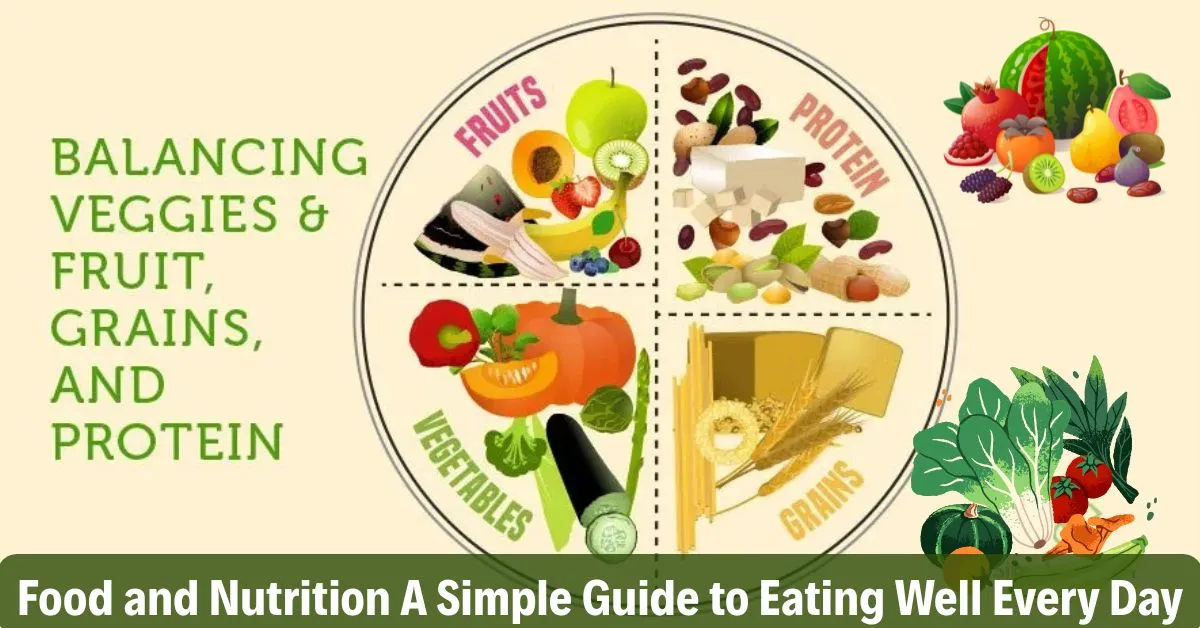
Use your plate as a guide.
Fill half with vegetables and fruits.
Add protein and grains in balance.
Choose healthy fats in small amounts.
Eat slowly.
Stop when comfortably full.

Empty Calories, Fast Food, and Hidden Sugars
Empty calories provide energy without nutrients.
Sugary drinks are a major source.
Fast food often hides excess salt and fat.
These foods increase hunger later.
Limiting them supports steady energy and control.
Special Nutrition Needs Across Life Stages
Children need nutrients for growth.
Adults need balance for work and stress.
Older adults need more protein and calcium.
Needs shift with age.
Basics stay the same.
Should You Take Daily Vitamins or Supplements?
Food should come first.
Supplements help only when gaps exist.
Some people need vitamin D or iron support.
Unneeded supplements may cause harm.
Match supplements to real needs, not trends.
Malnutrition: Undernutrition and Over-nutrition
Malnutrition is not only hunger.
It also includes excess calories with low nutrients.
Both weaken the body.
Both raise disease risk.
Balanced meals help prevent both extremes.
Simple Meal Prep Ideas for Better Nutrition
Plan meals ahead of time.
Cook grains and proteins in batches.
Wash and cut vegetables early.Simple prep saves time and stress.
It makes good choices easier.
FAQ
What is good nutrition?
Good nutrition provides energy and essential nutrients from varied foods.
Are calories bad for health?
No. Calories are fuel. Balance matters more than numbers.
What foods should I eat daily?
Vegetables, fruits, grains, protein, and healthy fats.
Is fast food always unhealthy?
Occasional intake is fine. Regular reliance causes imbalance.
Do older adults need special diets?
Yes. Protein, calcium, and hydration become more important.
Can supplements replace food?
No. Food offers benefits supplements cannot replace.





2 thoughts on “Food and Nutrition: A Simple Guide to Eating Well Every Day”