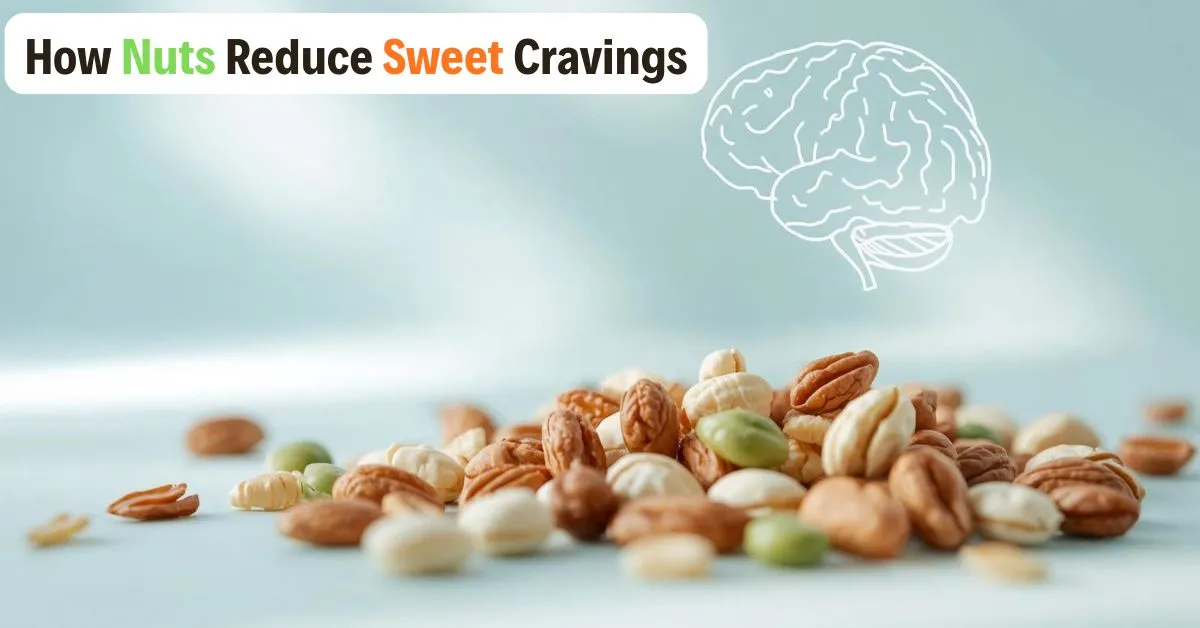
Sweet cravings usually hit when your blood sugar drops or your meals lack enough protein and healthy fats. Nuts help break this cycle because their mix of protein, fiber, and slow-digesting fats keeps your energy steady for hours. When your blood sugar stays stable, your brain doesn’t send urgent signals for quick sugar fixes. Over time, choosing nuts instead of sweets can shift your eating habits, calm intense cravings, and make healthier food choices feel easier and more natural.
One of the most remarkable findings from recent research is nuts’ specific ability to combat sweet cravings the most challenging type of craving for many people trying to improve their diet.

Table of Contents
The Blood Sugar Connection
Sweet cravings rarely come out of nowhere. They’re typically triggered by blood sugar fluctuations. Here’s the cycle:
- You eat something high in refined sugar or simple carbs
- Blood glucose spikes rapidly
- Your pancreas releases insulin to bring it back down
- Blood sugar drops below baseline (reactive hypoglycemia)
- Your brain perceives this as an energy crisis
- You experience intense cravings for quick-energy foods especially sweets
Nuts interrupt this vicious cycle at multiple points. Their low glycemic index prevents the initial spike, while their protein and fat content slows glucose absorption, maintaining stable blood sugar levels for hours.
A study in the Journal of the American Heart Association found that substituting nuts for typical snacks reduced blood sugar variability by 35% and HbA1c (a marker of long-term blood sugar control) by 0.3 points equivalent to the effect of some diabetes medications.
Rewiring Your Taste Preferences
Here’s something fascinating: consistently choosing nuts over sweets can actually change your taste preferences over time. Research in appetite neuroscience shows that:
Dopamine sensitivity increases: When you repeatedly satisfy hunger with nutrient-dense foods rather than hyper-palatable processed foods, your brain’s reward system recalibrates. Foods like fruits begin tasting sweeter, and intensely sugary foods may start tasting cloying.
Craving patterns shift: The American Journal of Clinical Nutrition study mentioned earlier found that after 16 weeks of regular nut consumption, participants reported 45% fewer sweet cravings and naturally gravitated toward healthier food choices even when high-sugar options were available.
Habit formation: Neuroscience research indicates it takes approximately 66 days to form a new automatic behavior. By consistently reaching for nuts instead of cookies for 2-3 months, you’re literally rewiring the neural pathways that drive your snacking habits.
The Protein Factor in Sweet Cravings
Inadequate protein intake is one of the most overlooked causes of persistent sweet cravings. Your body needs approximately 20-30 grams of protein per meal to optimize satiety, but most people fall short, especially at breakfast and lunch.
When protein intake is insufficient, your body seeks quick energy and sweet foods provide the fastest glucose delivery. This explains why people who skip breakfast or eat low-protein meals often experience mid-morning cookie cravings.
Nuts provide a protein boost exactly when you need it: between meals. Two ounces of almonds deliver about 12 grams of plant-based protein, helping you reach optimal daily intake without excessive meal planning.

Real-World Success Story: The 30-Day Nut Challenge
Consider the experience of participants in a dietary intervention study at Penn State University. Individuals with persistent sweet cravings were instructed to eat 1.5 ounces of mixed nuts whenever they felt the urge for sweets.
After 30 days:
- 78% reported significantly reduced sweet cravings
- 65% had stopped keeping candy and cookies in their homes
- 82% said they felt more in control of their eating
- Average added sugar intake decreased from 18 teaspoons daily to 7 teaspoons
The researchers concluded that nuts work as both a physiological intervention (stabilizing blood sugar) and a behavioral tool (pattern interruption).
Tips for Using Nuts to Conquer Sweet Cravings
Timing is everything: Keep portioned nuts readily available. When a craving hits, eat nuts first, then wait 15 minutes. Most cravings will subside.
Flavor combinations: If you need sweetness, try almonds with a small amount of dark chocolate (70%+ cacao) or pistachios with dried cherries. This provides satisfaction without triggering the blood sugar rollercoaster.
Hydration check: Sometimes what feels like a sweet craving is actually dehydration. Drink water with your nuts.
Sleep connection: Poor sleep increases ghrelin and decreases leptin, intensifying cravings. If you’re chronically sleep-deprived, no amount of nuts will completely solve the problem but they’ll help manage symptoms while you address the root cause.
The science is clear: nuts aren’t just a substitute for sweets they’re an active intervention that addresses the root causes of sweet cravings while training your palate to prefer less processed foods.
Nutritional Profile: Why Nuts Are Superior Snacks
To truly appreciate why nutritionists and researchers consistently recommend nuts, we need to examine their exceptional nutritional density. Few foods pack this much nutrition into such a compact package.
The Macronutrient Advantage
Protein Quality: While nuts provide less protein per ounce than animal sources, their plant-based protein comes with benefits animal proteins lack fiber, antioxidants, and zero cholesterol. Nuts contain all nine essential amino acids, though in varying proportions, making them nearly complete proteins when consumed as part of a varied diet.
Healthy Fats Breakdown: The 13-20 grams of fat in an ounce of nuts is primarily unsaturated:
- Monounsaturated fats (MUFAs): Found especially in almonds, cashews, and pecans, these fats improve cholesterol profiles and reduce cardiovascular disease risk
- Polyunsaturated fats (PUFAs): Walnuts are exceptional sources of alpha-linolenic acid (ALA), a plant-based omega-3 that supports brain health and reduces inflammation
- Saturated fats: Present in small amounts (1-3g per ounce), these don’t pose the same health risks as saturated fats from processed foods
Smart Carbohydrates: Nuts contain 4-8 grams of carbs per ounce, but most comes from fiber rather than sugar. This makes them ideal for blood sugar management and gut health.
Micronutrient Powerhouses
Vitamin E: Almonds lead the pack with 7.3mg per ounce (37% of daily needs). This potent antioxidant protects cells from oxidative stress, supports immune function, and promotes skin health.
Magnesium: Cashews and almonds provide 70-80mg per ounce (17-20% DV). This mineral is crucial for over 300 enzymatic reactions, including energy production, blood pressure regulation, and blood sugar control. An estimated 50% of Americans are magnesium-deficient.
Selenium: Brazil nuts are extraordinarily rich in selenium just 1-2 nuts provide your entire daily requirement. This trace mineral supports thyroid function and has powerful antioxidant properties.
Phosphorus: Essential for bone health and energy metabolism, nuts provide 10-15% of daily needs per ounce.
Copper, Zinc, and Manganese: These trace minerals support immune function, wound healing, and antioxidant defenses.
Antioxidant Arsenal
Nuts contain an impressive array of antioxidant compounds:
Polyphenols: These plant compounds fight inflammation and oxidative stress. Walnuts and pecans have the highest polyphenol content among common nuts.
Phytosterols: Structurally similar to cholesterol, these compounds compete for absorption in the digestive tract, potentially lowering LDL cholesterol by 10-15%.
Resveratrol: Found in peanuts (technically legumes, but nutritionally similar to tree nuts), this compound is associated with longevity and cardiovascular benefits.
Ellagic acid: Abundant in walnuts, pecans, and almonds, this antioxidant has shown promise in cancer prevention research.

The Anti-Inflammatory Effect
Chronic low-grade inflammation underlies most modern chronic diseases from diabetes to heart disease to Alzheimer’s. Nuts are among the most anti-inflammatory foods you can eat.
A meta-analysis of 20 studies found that regular nut consumption significantly reduces inflammatory markers:
- C-reactive protein (CRP) decreased by an average of 0.29 mg/L
- Interleukin-6 (IL-6) decreased by 0.25 pg/mL
- Tumor necrosis factor-alpha decreased by 0.16 pg/mL
These reductions translate to meaningful disease risk reduction. Each 1 mg/L decrease in CRP is associated with approximately 20% lower cardiovascular disease risk.
Nutrient Density Comparison
Let’s put this in perspective. Per 100 calories, nuts provide:
- 4-5 times more protein than chips or pretzels
- 3-4 times more fiber than most crackers
- 10-20 times more vitamin E than cookies
- 5-8 times more magnesium than candy
- Hundreds of times more antioxidants than most processed snacks
This is what nutritionists mean by “nutrient density” maximum nutrition per calorie consumed.
The Calorie Paradox
Despite being calorie-dense, nuts don’t lead to weight gain when consumed in reasonable amounts. Multiple mechanisms explain this paradox:
- Incomplete absorption: As mentioned earlier, we don’t digest 100% of nut calories
- Increased satiety: You eat less at subsequent meals
- Thermogenesis: Your body burns more calories processing nuts
- Metabolic advantages: Improved insulin sensitivity and fat oxidation
A systematic review of 33 clinical trials found that adding nuts to diets did not cause the expected weight gain based on their calorie content. In some studies, participants actually lost weight despite adding 250-500 calories from nuts daily.
Research Findings: Nuts’ Effect on Diet Quality and Eating Patterns
The evidence supporting nuts for improved health outcomes is remarkably consistent across numerous large-scale studies. Let’s examine the research that’s reshaping nutritional guidelines.
The Landmark Penn State Study
Published in the journal Nutrients in 2024, this randomized controlled trial specifically examined young adults (ages 18-30) at high risk for metabolic syndrome. This demographic is particularly important because early dietary interventions can prevent decades of chronic disease.
Study Design:
- 73 participants completed the 16-week trial
- Intervention group: 2 ounces of tree nuts daily as snacks
- Control group: Isocaloric high-carb snacks
- Neither group received calorie restriction instructions
Key Findings:
Craving Reduction: The nut group experienced a 40% reduction in overall food cravings, with sweet cravings specifically decreasing by 45%. The control group showed no significant change.
Diet Quality Improvements: Using the Healthy Eating Index-2015 (HEI-2015), researchers found:
- Nut group: HEI scores increased from 58.3 to 72.1 (+14 points)
- Control group: HEI scores increased from 59.1 to 62.4 (+3 points)
This 14-point improvement is clinically significant. Every 10-point increase in HEI is associated with a 10-15% reduction in chronic disease risk.
Food Choice Patterns: Without being instructed to change their diets beyond the snack substitution, the nut group naturally:
- Increased vegetable consumption by 1.2 servings daily
- Reduced refined grain intake by 0.8 servings daily
- Decreased added sugar consumption by 9 grams daily
- Improved protein quality scores
Weight Outcomes: The control group gained an average of 2.1 pounds over 16 weeks consistent with typical young adult weight gain patterns. The nut group maintained stable weight despite no calorie restrictions, representing a significant relative benefit.
The Nurses’ Health Study: Long-Term Nut Consumption
This massive prospective cohort study followed over 76,000 women for 30 years, providing invaluable data on long-term eating patterns.
Findings:
- Women who consumed nuts 5+ times per week had 20% lower risk of type 2 diabetes compared to those rarely eating nuts
- Nut consumption was associated with 35% lower coronary heart disease risk
- Each serving per week correlated with 3% lower cardiovascular mortality
The PREDIMED Study: Mediterranean Diet and Nuts
This Spanish study of over 7,000 participants at high cardiovascular risk demonstrated that supplementing a Mediterranean diet with 30 grams of mixed nuts daily:
- Reduced major cardiovascular events by 28%
- Decreased stroke risk by 46%
- Lowered atrial fibrillation incidence by 38%
Meta-Analysis: Nuts and Metabolic Health
A comprehensive meta-analysis published in BMC Medicine analyzed 33 randomized controlled trials involving 1,301 participants. The researchers found that nut consumption significantly improved:
Blood Lipids:
- Total cholesterol: -10.9 mg/dL
- LDL cholesterol: -10.2 mg/dL
- Triglycerides: -20.6 mg/dL
- No negative impact on HDL (good) cholesterol
Glucose Control:
- Fasting glucose: -1.29 mg/dL
- Fasting insulin: -0.41 μU/mL
- HOMA-IR (insulin resistance marker): -0.24 units
- HbA1c: -0.08%
Blood Pressure:
- Systolic BP: -1.29 mmHg
- Diastolic BP: -0.69 mmHg
While individual reductions may seem modest, their combined effect significantly reduces cardiovascular disease risk.
The Appetite Hormone Studies
Multiple trials using blood samples have documented nuts’ effects on hunger-regulating hormones:
A University of California study found that consuming almonds as a morning snack resulted in:
- 18% higher GLP-1 levels compared to crackers
- 12% lower ghrelin levels throughout the afternoon
- Participants reported feeling satisfied 30 minutes longer
Dietary Pattern Shift Research
Perhaps most intriguing are studies showing that regular nut consumption creates a “health halo effect” people who consistently eat nuts tend to adopt other healthy behaviors:
- 34% more likely to meet recommended fruit/vegetable intake
- 28% more likely to exercise regularly
- 41% less likely to smoke
- 22% more likely to maintain healthy body weight
Researchers at Harvard School of Public Health suggest that nuts serve as a “gateway food” to healthier overall eating patterns, possibly because successfully making one positive change builds self-efficacy for making others.

The Takeaway from Research
The evidence is overwhelming: nuts aren’t just a healthy snack they’re a dietary intervention with measurable, clinically significant benefits for metabolic health, disease prevention, and eating behavior modification.
What makes this research particularly compelling is its consistency across different populations, study designs, and geographical regions. Whether you’re looking at short-term controlled trials or decades-long observational studies, the message remains the same: regular nut consumption is associated with better health outcomes.
The Role of Protein and Healthy Fats in Craving Reduction
To understand why nuts are so effective at reducing cravings, we need to dive deeper into the specific roles that protein and healthy fats play in appetite regulation.
Protein: The Satiety Champion
Protein is the most satiating macronutrient, producing stronger and longer-lasting fullness than either carbohydrates or fats. Here’s why:
Amino Acid Signaling: When you consume protein, it’s broken down into amino acids. Specific amino acids (particularly leucine, lysine, and arginine) trigger satiety centers in your hypothalamus, directly reducing hunger drive.
Peptide YY Release: High-protein foods stimulate intestinal cells to release PYY, a hormone that slows gastric emptying and signals fullness to the brain. Studies show protein increases PYY levels by 20-30% more than carbohydrates.
Energy Expenditure: Your body burns 20-30% of protein calories just through digestion and metabolism (the thermic effect mentioned earlier). This means a 100-calorie serving of almonds (with about 6g protein) actually nets only 80-85 usable calories after accounting for digestive energy costs.
Blood Sugar Stabilization: Protein slows carbohydrate absorption, preventing the glucose spikes that trigger reactive hunger and cravings.
The Protein Leverage Hypothesis
Emerging research suggests humans have a powerful biological drive to consume a specific amount of protein daily (approximately 15-20% of total calories). The “protein leverage hypothesis” proposes that when foods are low in protein, we overconsume calories trying to meet our protein needs.
This explains a fascinating observation: when people eat protein-rich snacks like nuts, they spontaneously reduce calorie intake at subsequent meals by 10-15%, even without consciously trying. Their protein needs are satisfied, so appetite naturally diminishes.
A study in Obesity Research found that increasing protein from 15% to 30% of calories (while keeping carbs and fats proportional) led to spontaneous calorie reduction of 441 calories daily without any intentional restriction.
Healthy Fats: Slow-Burning Fuel
While protein gets most of the satiety credit, healthy fats play an equally important role in craving control:
Sustained Energy Release: Fats are digested slowly, providing steady energy for 4-6 hours after consumption. This prevents the energy valleys that trigger cravings for quick-fix foods.
Cholecystokinin (CCK) Stimulation: When fat enters your small intestine, it triggers CCK release. This hormone slows stomach emptying, enhances feelings of fullness, and sends satiety signals to the brain. Unsaturated fats (abundant in nuts) stimulate more CCK than saturated fats.
Flavor and Satisfaction: Fats carry flavor compounds and create pleasant mouthfeel. This sensory satisfaction is psychologically important it’s why fat-free foods often leave people feeling unsatisfied despite adequate calories.
Nutrient Absorption: Many vitamins (A, D, E, K) are fat-soluble, meaning you need dietary fat to absorb them properly. The fats in nuts help you extract maximum nutrition from your entire meal.
Monounsaturated Fats: The Mediterranean Secret
Nuts are particularly rich in monounsaturated fatty acids (MUFAs), the same fats that make the Mediterranean diet so healthful. Research shows MUFAs:
- Increase fat oxidation (your body’s ability to burn stored fat for energy)
- Improve insulin sensitivity by 9-15%
- Reduce visceral (belly) fat more effectively than saturated or omega-6 fats
- Lower inflammation markers
A clinical trial published in Diabetes Care found that replacing carbohydrates with MUFAs (from almonds and olive oil) led to:
- 5% reduction in abdominal fat
- Improved insulin sensitivity
- No weight gain despite adding calorie-dense fats
Omega-3s: Brain and Body Benefits
Walnuts stand out for their omega-3 content specifically alpha-linolenic acid (ALA). While not as potent as the EPA and DHA found in fish, ALA still provides significant benefits:
Brain Health: Omega-3s are structural components of brain cell membranes. Adequate intake supports cognitive function, mood regulation, and may reduce depression risk important because emotional states strongly influence eating behavior.
Inflammation Reduction: Omega-3s produce anti-inflammatory compounds called resolvins that help resolve chronic inflammation. Since inflammation can disrupt leptin signaling (causing leptin resistance), this indirectly supports healthy appetite regulation.
Mood and Cravings: Several studies link omega-3 deficiency to increased food cravings and emotional eating. One trial found that omega-3 supplementation reduced cravings for sweets and salty snacks by 25-30%.
The Synergistic Effect
Here’s what makes nuts uniquely effective: it’s not just the protein OR the healthy fats it’s the combination working synergistically.
When you eat nuts, you get:
- Immediate satisfaction from flavor and mouthfeel
- Short-term satiety (30 minutes to 2 hours) from protein’s hormonal effects
- Long-term satiety (2-6 hours) from slow fat digestion
- Blood sugar stability from the protein-fat-fiber combination
- Metabolic advantages from increased thermogenesis
This multi-layered satiety effect explains why a small handful of nuts can keep you satisfied far longer than a large bag of chips, despite similar calorie counts.
Optimal Macronutrient Ratios for Craving Control
Research on appetite regulation suggests the ideal snack contains:
- 30-40% of calories from protein
- 40-60% from healthy fats
- 10-20% from complex carbohydrates (primarily fiber)
Nuts naturally fall into this optimal range, making them the perfect between-meal snack for craving control and weight management.
Metabolic Benefits: Hormones, Energy Balance, and Weight Control
Beyond simply reducing cravings, nuts exert profound effects on your metabolic health the complex system of hormones and processes that regulate energy use, fat storage, and disease risk.
Impact on Resting Metabolic Rate
Studies show that regular nut consumption may increase RMR by 4-11%, likely due to:
- Increased thermogenesis from protein and unsaturated fats
- Improved mitochondrial function from antioxidants and magnesium
- Enhanced fat oxidation capacity
Your resting metabolic rate (RMR) the calories you burn just staying alive accounts for 60-75% of total daily energy expenditure. Even small increases can significantly impact weight management over time.
A study in the International Journal of Obesity found that adding almonds to a calorie-restricted diet led to 62% greater weight loss than an equivalent-calorie diet without nuts partly attributable to higher energy expenditure.
Cardiovascular Health Transformation
The cardiovascular benefits of regular nut consumption are among the most well-documented effects:
Cholesterol Improvements:
- LDL (“bad”) cholesterol: reduced by 10-15%
- HDL (“good”) cholesterol: maintained or slightly increased
- Triglycerides: decreased by 10-20%
- Total cholesterol to HDL ratio: improved significantly
These changes translate to real-world outcomes. The Harvard Nurses’ Health Study found that consuming nuts 5+ times weekly reduced coronary heart disease risk by 35% compared to rare consumption.
Blood Pressure Regulation: Multiple trials demonstrate modest but consistent blood pressure reductions:
- Systolic BP: 1.3-2.5 mmHg decrease
- Diastolic BP: 0.7-1.6 mmHg decrease
While these numbers seem small, population studies suggest each 2 mmHg reduction in systolic pressure prevents approximately 10% of stroke deaths and 7% of coronary heart disease deaths.