
A PCOD diet chart plays a key role or those women who are dealing with Polycystic Ovarian Disease (PCOD) and reducing its symptoms naturally. PCOD can cause irregular periods, weight gain, skin problems like acne, and difficulty in getting pregnant. While medicines may be needed in some cases, eating the right foods every day helps balance hormones, control insulin levels, and improve overall health. This blog explains the PCOD diet in a clear and easy way, covering what to eat, what to avoid, and simple lifestyle tips you can follow daily.
Table of Contents
What Is PCOD?
PCOD (Polycystic Ovarian Disease) is a common hormonal condition affecting many women. In this condition, the ovaries produce several small, immature eggs that do not develop properly. These eggs may form cysts, and the ovaries begin producing higher levels of male hormones (androgens).

Because of this hormonal imbalance, women may experience:
- Irregular or missed periods
- Weight gain, especially around the abdomen
- Acne and oily skin
- Excess facial or body hair
- Hair thinning on the scalp
- Difficulty in getting pregnant
PCOD usually begins during the teenage years but can appear at any age. Although it cannot be completely cured, PCOD can be effectively managed with the right diet and lifestyle changes.
Why Is Diet Important in PCOD?
Diet directly affects the root cause of PCOD—insulin resistance. Many women with PCOD have higher insulin levels, which trigger the ovaries to produce more male hormones. This worsens symptoms like weight gain, acne, and irregular periods.
A proper PCOD diet plan helps to:
- Control insulin resistance
- Balance hormones naturally
- Regulate menstrual cycles
- Reduce inflammation
- Support weight management and fertility
That’s why doctors recommend a balanced diet for PCOD focused on low-glycemic foods, fiber, lean protein, and healthy fats.
How PCOD Affects Hormones, Weight & Fertility
Hormonal Imbalance in PCOD
High insulin levels increase androgen hormones, which interfere with ovulation and menstrual regularity.
PCOD Weight Gain Causes
Slow metabolism in PCOD makes fat loss difficult, even with small dietary mistakes.
PCOD and Fertility
Irregular ovulation can reduce pregnancy chances. A consistent PCOD fertility diet can improve ovulation and egg quality over time.
PCOD Food Chart: Foods to Eat and Avoid
Choosing the right foods is the foundation of PCOD management.
Foods to Eat vs Foods to Avoid in PCOD
| Foods to Eat in PCOD | Foods to Avoid in PCOD |
|---|---|
| Whole grains (oats, brown rice, millets) | White bread, white rice, maida |
| Leafy vegetables (spinach, broccoli) | Fried foods and fast food |
| Lean protein (eggs, fish, tofu, dal) | Sugary sweets and desserts |
| Healthy fats (nuts, seeds, olive oil) | Packaged snacks and chips |
| Low-GI fruits (apple, berries, pear) | Sugary drinks and sodas |
| Anti-inflammatory foods (turmeric, ginger) | Processed and red meats |
These food choices help stabilise blood sugar and reduce PCOD symptoms.
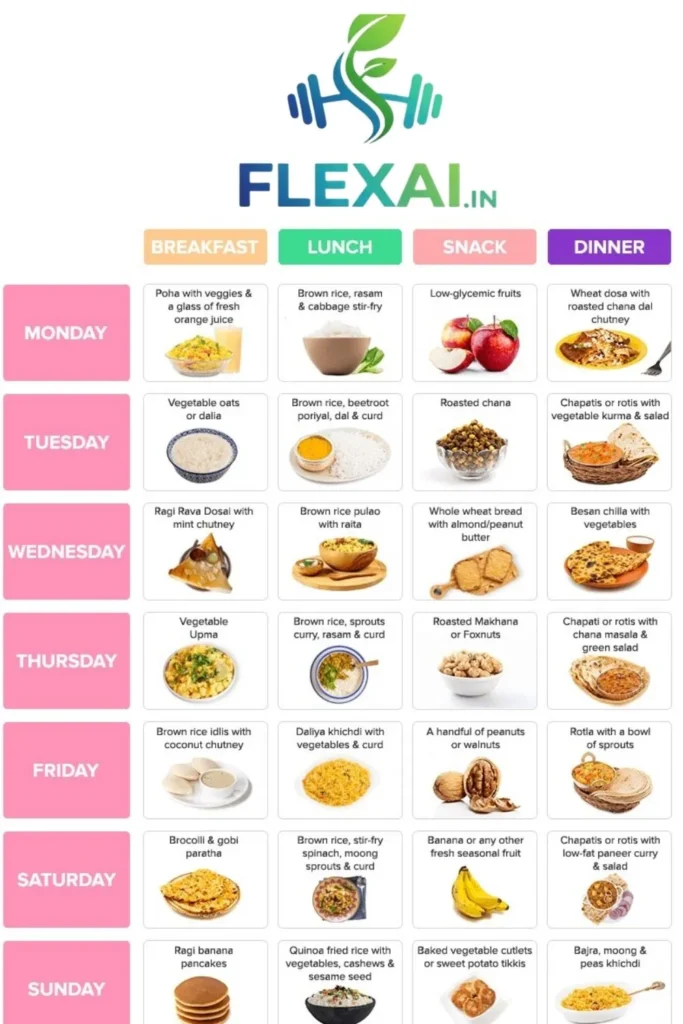
PCOD Diet Chart (Daily Meal Plan – Easy to Follow)

| Time of Day | What to Eat | Why It Helps in PCOD |
|---|---|---|
| Early Morning | Warm water with lemon / jeera or methi water | Improves digestion and insulin sensitivity |
| Breakfast | Vegetable oats, poha, besan chilla, moong dal dosa | Low GI + fiber for blood sugar control |
| Mid-Morning Snack | Apple, pear, guava, berries | Prevents cravings and energy crashes |
| Lunch | 1–2 multigrain rotis or brown rice + dal/paneer/fish + sabzi + salad | Balanced meal for hormone control |
| Evening Snack | Green tea + roasted chana/makhana/nuts | Supports metabolism and fat loss |
| Dinner | Vegetable soup, khichdi, tofu stir-fry, or roti + sabzi | Light meals prevent weight gain |
| Before Bed (optional) | Warm turmeric milk or herbal tea | Reduces inflammation and improves sleep |
PCOD Diet Plan for Weight Loss
This PCOD diet for weight loss focuses on improving insulin resistance and promoting steady fat loss.
PCOD Weight Loss Tips
- Eat meals at regular times
- Avoid skipping meals
- Increase protein and fiber intake
- Reduce sugar and refined carbohydrates
Sample PCOD Weight Loss Plan
| Meal | Food Options |
|---|---|
| Morning | Warm lemon water |
| Breakfast | Vegetable oats + boiled egg or sprouts |
| Lunch | Multigrain roti + sabzi + low-fat curd |
| Evening | Green tea + almonds |
| Dinner | Vegetable soup + grilled paneer/tofu |
PCOD Diet Chart Vegetarian for Weight Loss
This PCOD vegetarian diet is rich in plant-based protein and fiber.
| Meal | Food Options |
|---|---|
| Breakfast | Besan chilla or moong dal dosa |
| Lunch | Multigrain chapati + dal + sabzi + salad |
| Dinner | Vegetable khichdi or tofu stir-fry |
| Snacks | Fruits, nuts, green tea |
PCOD Diet Chart for Weight Gain
Some women with PCOD are underweight and need to gain healthy weight.
| Meal | Food Options |
|---|---|
| Breakfast | Paneer paratha + curd |
| Snack | Peanut butter sandwich |
| Lunch | Chapatis + dal + paneer/tofu + curd |
| Dinner | Rice + vegetables + sweet potato |
PCOD Diet Chart for Pregnancy & Fertility
This PCOD diet for pregnancy planning supports ovulation and fetal health.
| Meal | Food Options |
|---|---|
| Breakfast | Vegetable upma or daliya |
| Lunch | Chapatis + dal + green vegetables |
| Snack | Coconut water + roasted chana |
| Dinner | Khichdi or rice with vegetables |
Lifestyle Changes That Support PCOD Diet
Diet works best when supported by healthy daily habits.
- Exercise for PCOD: Brisk walking, yoga, light strength training
- Yoga for PCOD: Surya Namaskar, Baddha Konasana
- Stress management for PCOD: Meditation, deep breathing
- Sleep and PCOD: 7–8 hours of quality sleep
These lifestyle changes for PCOD improve long-term hormone balance.
When Should You See a Doctor?
Consult a gynecologist if you experience:
- Excessive acne or hair growth
- Rapid or unexplained weight gain
- Irregular or absent periods
- Difficulty getting pregnant
- Pelvic pain or discomfort
Early treatment helps prevent future complications.
Final Words
A balanced PCOD diet chart is one of the most effective ways to manage PCOD naturally. With the right food choices, regular exercise, good sleep, and stress control, many women experience improved periods, better weight management, and enhanced fertility.
Frequently Asked Questions (FAQs)
Which is the best food for PCOD?
High-fiber vegetables, whole grains, lean proteins, and healthy fats are best for PCOD.
Can PCOD be managed naturally?
Yes. Diet, exercise, stress management, and proper sleep play a major role.
Can PCOD girls eat curd?
Yes, plain low-fat curd supports digestion and protein intake.
Can women with PCOD drink milk?
Low-fat or skimmed milk is usually better. Some women may need to limit dairy.
Is poha good for PCOD?
Yes, poha is suitable when cooked with less oil and more vegetables.