For generations, our elders followed a simple rule eat what grows in the season. From cooling drinks like aam panna in summer to warm methi ladoos in winter, they always knew what the body needed and when. But today, with every fruit and vegetable available year-round, we’ve drifted away from this natural rhythm.
Seasonal eating is more than a nostalgic tradition; it’s a way to nourish your body with foods that are naturally aligned with your environment and health.
Key Takeaways On Seasonal Eating
- Seasonal foods are richer in nutrients and taste better because they are harvested at their natural peak.
- Eating with the seasons supports digestion, immunity, and overall wellness.
- Local and seasonal produce is more affordable and reduces environmental impact.
- Summer brings hydration; winter brings warmth each season offers foods your body needs.
- Choosing local fruits and vegetables strengthens community farmers and cuts your carbon footprint.
The Wisdom of Eating With Nature
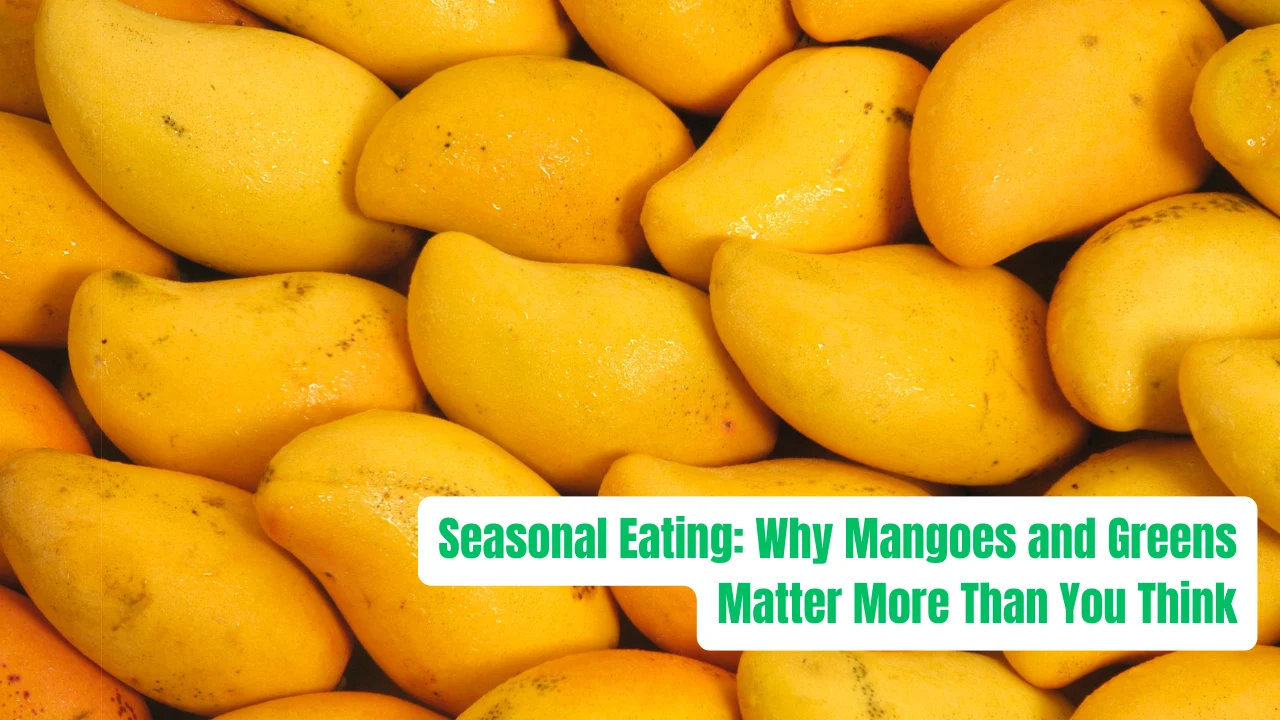
In traditional Indian kitchens, food choices always changed with the season. Summer meant light and hydrating meals buttermilk, cucumbers, chaas, and fresh mangoes. Winter brought warmth through sarson ka saag, makki ki roti, ghee-laden panjiri, and dry fruits.
This wasn’t coincidence; it was nature’s design. When we eat seasonal food, we sync our body’s energy with the environment. According to Ayurvedic principles, every season shifts our internal balance and nature provides exactly what’s needed to restore it.
Seasonal Foods and Their Benefits
| Season | Key Foods | Benefits |
|---|---|---|
| Summer | Watermelon, cucumber, mint, raw mango, bottle gourd | Keeps body cool, hydrates, reduces heat-related fatigue |
| Monsoon | Ginger, turmeric, jamun, amla, lentils | Boosts immunity, aids digestion, fights infections |
| Winter | Carrots, beets, methi, jaggery, nuts, ghee | Improves strength, supports metabolism, enhances immunity |
When you eat food grown in its natural season, you get maximum vitamins, minerals, and antioxidants. Studies show that broccoli harvested in fall can contain nearly double the vitamin C compared to spring-grown crops. Similarly, summer fruits like mangoes and melons are packed with hydration and vitamin A, perfect for hot weather.
Health and Environmental Impact
Seasonal eating doesn’t just benefit your health it’s also good for the planet. Local, in-season produce requires less transportation, storage, and chemical ripening, which lowers carbon emissions. Buying directly from nearby farmers’ markets or community-supported programs strengthens the local economy and ensures you get fresher, more flavorful produce.
Economically, in-season foods are cheaper because they’re grown in abundance and don’t require expensive preservation methods. This makes seasonal eating a budget-friendly way to maintain a balanced diet.
How to Bring Seasonal Eating Into Your Daily Life
- Shop Local: Visit farmers’ markets and ask vendors what’s freshest.
- Plan a Seasonal Plate: Include two seasonal fruits and three seasonal vegetables each week.
- Preserve Naturally: Freeze mango pulp, sun-dry methi leaves, or ferment radish and amla for year-round nutrition.
- Follow Your Body: Eat cooling foods in summer and warming foods in winter your digestion will thank you.
Remember, nature always provides what your body needs at the right time. Eating with the seasons reconnects you with your body’s natural intelligence a quiet reminder that wellness starts with simplicity.